

2007-12-07
G7.2 - Merchandising
As an early Christmas present the Merchandising module was released in December of 2007. Before the release of this module the templates were used to filter the results from the other modules. Now the templates can be used to filter the whole product set. Thus, using the administration interface templates can be created that show the products you want. For example, the five products within the category DVD sorted on release date.

2007-10-04
G7.1 - Metrics
In the marketing material Avail boasts of sales increases. The customers that have measured the sales enhancing benefits of the eMarketing Suite know that the claims made are valid. Unfortunately not all our customers have had the time or the tools to implement this measurement. To fix this Avail in the fall of 2007 released the Metrics module. To make sure that as many as possible are aware of the effects of the eMarketing Suite we decided to make this module free for all Avail's customers to use. The Metrics module performs an automatic A/B-test. When a visitor enters the site he or she is randomly assigned to either the A- or B-group. Default one out of a hundred is assigned to the B-group.Throughout the session the A-group is shown normal eMarketing results and the B-group is shown blank or randomly selected top sellers. The Metrics module can measure:

- Average Order Value
- Conversion Rate
- Sales

2007-03-15
G7.0 - Collaborative Searcher™
In the spring of 2007 the Collaborative Searcher™ (CS) was launched. The CS is a fast fuzzy search engine that uses social intelligence to optimize the search results. Focus for the CS - like all Avail's modules - was performance, simplicity and social intelligence. Our aims were:
In essence the CS does three things; searches, finds related words and collaborative searches.
1 Searches
The CS has a normal text logical search. This handles fuzzy searches and has very good performance. The reindexing of a large dataset (more than 2 million products) takes less than 5 minutes. The CS uses the same filtering system as the rest of the modules. This means that the searches can be sorted on any data you choose to upload and support multiple sort orders which enables sorting on the English, German, Swedish, French and so on alphabets. The search results can be filtered on any combinations of categories. The rule system allows creation of rules filters. For example, return only search results that cost less than 10 Euros and have been released the last year.
2 Finds clusters of related words
Using social intelligence the CS can learn which words belong to each other according to the view of the customers. For example, the word "Apple" has three meanings to users on a book site.

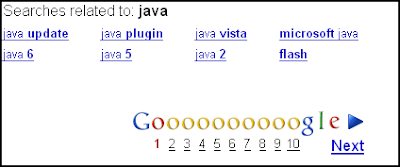
Making the related words clickable and the click leading to a new search including the clicked on word, yields a search navigation system which the customer can use to find the product he or she is looking for. This is to the best of our knowledge a brand new way of navigating a site. We know that Google has a similar functionality but it does not work in the same way and we beat them to it.
 3 Collaborative Searches
The collaborative searches are social intelligence searches. Instead of searching just on the search phrase submitted by the user, the search engine automatically adds the related words from the first cluster to the search. For example, if a user searches on just "harry" on a book site today we know that the user is looking for Harry Potter books in general and specifically the first and seventh book. It is difficult or impossible for a purely text-logical search engine to understand that this is what the users are looking for and return these books among the first results. The Collaborative Searcher™ would append the related words from the first cluster transforming the search on "harry" to a search on "harry potter rowling hallows deathly stone sorcerer prince blood" thus returning the most relevant results first.
A common headache for people that have been administrating a search engine is the list of synonyms. The related words mechanism is a replacement for synonyms. The related words are how customers perceive that words are related to each other in the closed world of the site.
- to create a search engine with outstanding performance
- make the implementation and administration as easy as possible with no or minimum impact on existing architecture
- use the social intelligence to optimize the search results
In essence the CS does three things; searches, finds related words and collaborative searches.
1 Searches
The CS has a normal text logical search. This handles fuzzy searches and has very good performance. The reindexing of a large dataset (more than 2 million products) takes less than 5 minutes. The CS uses the same filtering system as the rest of the modules. This means that the searches can be sorted on any data you choose to upload and support multiple sort orders which enables sorting on the English, German, Swedish, French and so on alphabets. The search results can be filtered on any combinations of categories. The rule system allows creation of rules filters. For example, return only search results that cost less than 10 Euros and have been released the last year.
2 Finds clusters of related words
Using social intelligence the CS can learn which words belong to each other according to the view of the customers. For example, the word "Apple" has three meanings to users on a book site.
- For most people Apple means a computer or the company. The related words in this cluster were mac, macintosh, g5, jobs and so on.
- The second most likely meaning was the fruit. The related words in the cluster were gardening, tree, pruning and so on.
- At a distant third meaning was the meaning the record label with only one word in the cluster; Beatles.

Making the related words clickable and the click leading to a new search including the clicked on word, yields a search navigation system which the customer can use to find the product he or she is looking for. This is to the best of our knowledge a brand new way of navigating a site. We know that Google has a similar functionality but it does not work in the same way and we beat them to it.
 3 Collaborative Searches
The collaborative searches are social intelligence searches. Instead of searching just on the search phrase submitted by the user, the search engine automatically adds the related words from the first cluster to the search. For example, if a user searches on just "harry" on a book site today we know that the user is looking for Harry Potter books in general and specifically the first and seventh book. It is difficult or impossible for a purely text-logical search engine to understand that this is what the users are looking for and return these books among the first results. The Collaborative Searcher™ would append the related words from the first cluster transforming the search on "harry" to a search on "harry potter rowling hallows deathly stone sorcerer prince blood" thus returning the most relevant results first.
A common headache for people that have been administrating a search engine is the list of synonyms. The related words mechanism is a replacement for synonyms. The related words are how customers perceive that words are related to each other in the closed world of the site.
Subscribe to:
Posts (Atom)